Introduction
Qwen 3 by Alibaba Cloud has emerged as one of the most impressive open-source AI models, particularly for multilingual applications. With strong performance across Chinese, English, and dozens of other languages, Qwen 3 challenges the assumption that open-source models can't match frontier capabilities.
The Qwen model family has evolved rapidly. Qwen 2.5 established the family as a serious contender in open-source AI. Qwen 3 builds on this foundation with improved reasoning, better coding capabilities, enhanced multilingual understanding, and more efficient architecture.
Qwen 3's key differentiator is its balanced multilingual performance. While most AI models excel at English and struggle with other languages, Qwen 3 maintains high quality across language families. This makes it the preferred choice for organizations building AI applications for Asian markets, multilingual enterprises, and global applications.
The model family includes dense models (0.6B to 72B parameters) and Mixture of Experts models (up to 235B parameters). This range enables deployment across diverse scenarios from edge devices to cloud servers. The MoE models provide frontier-level capabilities with manageable inference costs.
Qwen 3: Setting New Standards for Multilingual AI

Qwen 3 by Alibaba Cloud has emerged as one of the most impressive open-source AI models, particularly for multilingual applications. With strong performance across Chinese, English, and dozens of other languages, Qwen 3 challenges the assumption that open-source models can't match frontier capabilities.
The Qwen model family has evolved rapidly. Qwen 2.5 established the family as a serious contender in open-source AI. Qwen 3 builds on this foundation with improved reasoning, better coding capabilities, enhanced multilingual understanding, and more efficient architecture.
Qwen 3's key differentiator is its balanced multilingual performance. While most AI models excel at English and struggle with other languages, Qwen 3 maintains high quality across language families. This makes it the preferred choice for organizations building AI applications for Asian markets, multilingual enterprises, and global applications.
The model family includes dense models (0.6B to 72B parameters) and Mixture of Experts models (up to 235B parameters). This range enables deployment across diverse scenarios from edge devices to cloud servers. The MoE models provide frontier-level capabilities with manageable inference costs.
Technical Architecture and Innovations
Qwen 3's architecture incorporates several technical innovations that contribute to its strong performance.
Grouped Query Attention (GQA) reduces memory usage and improves inference speed compared to standard multi-head attention. This makes Qwen 3 models more efficient to serve, particularly for long-context applications.
The Mixture of Experts (MoE) architecture in larger Qwen 3 models activates only a subset of parameters for each input token. This approach provides the quality of a large model with the inference cost of a smaller one. Routing algorithms determine which experts handle each token, optimizing for both quality and efficiency.
RoPE (Rotary Position Embedding) with YaRN extension enables long-context processing up to 128K tokens. This allows Qwen 3 to process long documents, extensive codebases, and lengthy conversations without losing coherence.
The training pipeline uses a multi-stage approach: pre-training on massive multilingual corpora, supervised fine-tuning on instruction-following data, and reinforcement learning from human feedback (RLHF) for alignment. Each stage builds on the previous one, progressively improving the model's capabilities.
Code-specific training data and fine-tuning give Qwen 3 strong programming capabilities. The model understands multiple programming languages, frameworks, and coding patterns, making it competitive with specialized coding models.
Benchmark Performance and Comparisons
Qwen 3's benchmark performance demonstrates its competitive position in the AI model landscape.
On MMLU (Massive Multitask Language Understanding), Qwen 3 achieves scores competitive with GPT-4o and Claude 3.5 Sonnet. This benchmark tests knowledge across 57 academic subjects, and Qwen 3's strong performance indicates broad knowledge capabilities.
Coding benchmarks show Qwen 3 as a strong performer. On HumanEval and MBPP, Qwen 3 generates correct code at rates comparable to frontier models. Its performance on competition-level programming problems (Codeforces, APPS) demonstrates strong algorithmic reasoning.
Mathematical reasoning is a particular strength. Qwen 3 performs well on GSM8K, MATH, and competition-level math problems. Its ability to show step-by-step reasoning and verify solutions makes it valuable for mathematical applications.
Multilingual benchmarks highlight Qwen 3's key differentiator. On Chinese language tasks, Qwen 3 often outperforms all competitors. On multilingual understanding tasks spanning dozens of languages, Qwen 3 maintains consistently high performance where other models degrade for non-English languages.
The practical takeaway is that Qwen 3 is competitive with frontier models on most tasks and superior for multilingual applications. For organizations that need strong non-English performance, Qwen 3 is often the best available option.
Tool Use, Function Calling, and Agent Capabilities
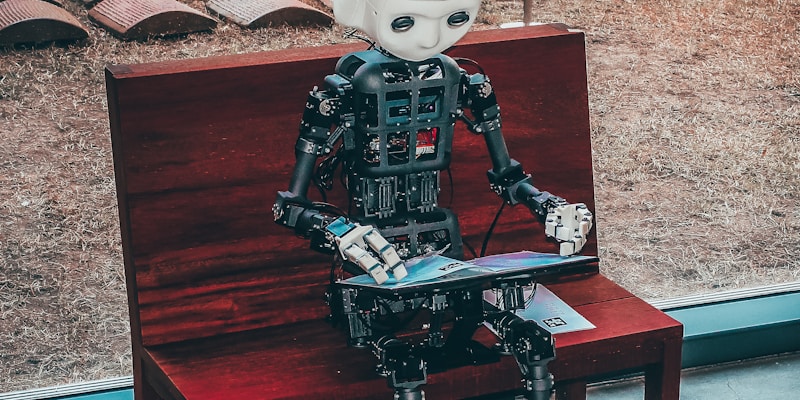
Qwen 3's tool use and agent capabilities make it suitable for building AI agents and automated workflows.
Function calling allows Qwen 3 to generate structured calls to external tools and APIs. The model understands tool descriptions, generates appropriate parameters, and handles tool responses. This capability is essential for building AI agents that interact with external systems.
Multi-step tool use enables Qwen 3 to chain multiple tool calls to complete complex tasks. The model can plan a sequence of tool invocations, execute them in order, and use intermediate results to determine next steps.
Code interpreter capabilities allow Qwen 3 to write and execute code to solve problems. When given a data analysis task, the model can write Python code, execute it, and interpret the results. This enables complex computational tasks that go beyond text generation.
Vision capabilities in Qwen 3-VL (Vision-Language) extend tool use to visual inputs. The model can analyze images, extract text from documents, understand diagrams, and generate descriptions. This multimodal tool use enables applications like document processing, visual inspection, and image-based search.
Agent frameworks like LangChain, CrewAI, and AutoGen have first-class support for Qwen models. This enables building sophisticated multi-agent systems powered by Qwen 3's capabilities.
Production Deployment Strategies
Deploying Qwen 3 in production requires choosing the right model size, deployment method, and optimization strategy.
Model selection depends on your requirements. For latency-sensitive applications, smaller Qwen 3 models (7B, 14B) provide fast responses with good quality. For complex tasks requiring maximum capability, larger models (72B, 235B MoE) provide the best results at higher cost and latency.
Quantization reduces hardware requirements while maintaining acceptable quality. Qwen 3 models are available in AWQ and GPTQ quantized formats, reducing memory requirements by 2-4x. A quantized 72B model can run on a single A100 GPU.
vLLM and TGI provide production-grade serving with features like continuous batching, streaming, and automatic scaling. These engines optimize inference throughput and latency for production workloads.
Alibaba Cloud's DashScope API provides a managed deployment option with competitive pricing. The API is OpenAI-compatible, making migration from other providers straightforward.
Monitoring and observability for Qwen 3 deployments should track latency, throughput, token usage, and response quality. Set up alerts for performance degradation and implement automated scaling based on demand.
The Future of Qwen and Open-Source AI
Qwen 3 represents the current state of a rapidly evolving model family. Several trends will shape its future development.
Multimodal expansion continues with improvements to vision, audio, and video understanding. Future Qwen models will likely integrate more modalities into a single model, enabling richer AI applications.
Agent capabilities are a focus area. Alibaba is investing in making Qwen models better at planning, tool use, and autonomous task completion. Future models will likely have more sophisticated agent frameworks built into the base model.
Efficiency improvements will make Qwen models more accessible. Smaller, more capable models reduce hardware requirements and enable deployment on consumer devices. This democratizes access to advanced AI capabilities.
The open-source AI ecosystem will continue to grow around Qwen. More fine-tunes, tools, and integrations will make Qwen increasingly practical for diverse applications. The competition between Qwen, Llama, Mistral, and DeepSeek drives continuous improvement that benefits all users.
For developers, Qwen 3 is a compelling choice for multilingual applications, cost-sensitive deployments, and scenarios where data sovereignty requires non-US models. Its strong performance, open-source license, and growing ecosystem make it a practical option for production AI applications.
Conclusion
The topics covered in this article represent important developments in modern software engineering. By understanding these concepts deeply and applying them in your projects, you can build more robust, scalable, and maintainable systems. Continue exploring, experimenting, and building — the technology landscape rewards those who stay curious and keep learning.